TXST News
Texas State’s card economist: people still overbid, even when handed the calculation
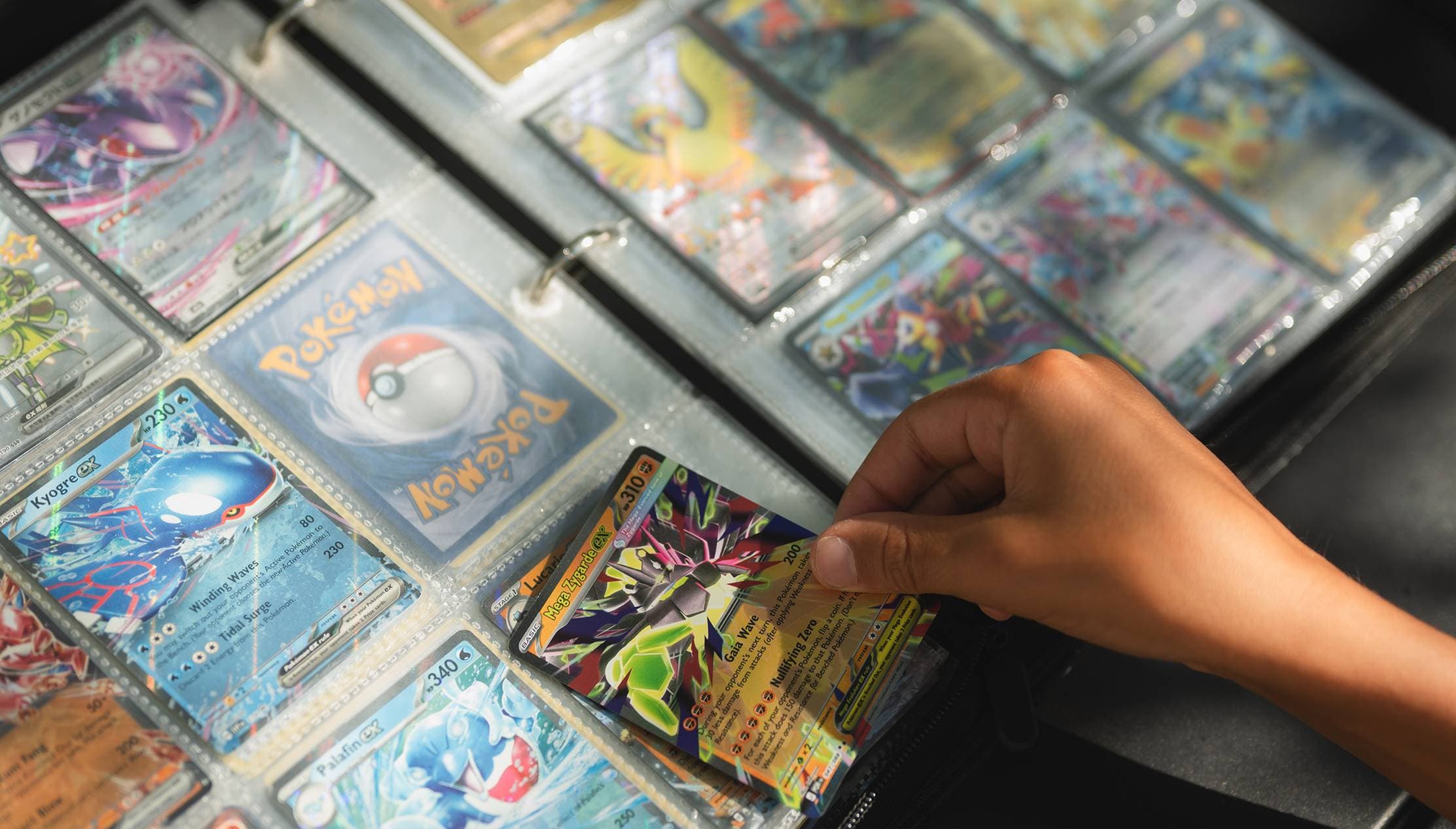
Pokémon, One Piece, basketball — the trading card market is booming in the US, and in Vietnam too. Dr. Jesse Backstrom, assistant professor of applied economics at Texas State, studies exactly this market. He calls his research group the Cardonomics Lab.

The Cardonomics Lab uses card and collectibles markets as real-world laboratories for studying economic behaviour — how people respond to incentives, information, risk and uncertainty — including field experiments run in person at card shows and on the online marketplaces where cards change hands.
The experiment: bidding on a pack that is easy to value
This is the most interesting part, and the reason an economics student should read it.
His team ran hundreds of auctions at around 20 large sports card shows across the US, with participants bidding on sealed packs. The economics is the winner’s curse: bidders estimate value differently, the most optimistic one wins, and unless they adjust for that, winners tend to overpay.
What makes this study unusual: the packs were deliberately simple to value — only base cards from two 1989 sets, nothing rare, so expected value was straightforward to calculate.
One card, three years, three prices
Dr. Backstrom gives a concrete example of volatility. A 2003 Topps Chrome LeBron James rookie card, graded PSA 10:
| When | Sold for |
|---|---|
| Peak, February 2021 | more than $40,000 |
| November 2024 | around $4,000 |
| July 2026 | around $18,000 |
A 90% fall, then a partial recovery. That path, he says, shows how volatile collectibles can be — and why a decline from a speculative peak does not mean the market disappears.
He also points to history: in the late-1980s and early-1990s “junk wax” era, manufacturers printed enormous quantities to meet demand. Perceived scarcity proved not to be scarcity, supply overwhelmed demand, and values collapsed for many products.
“Could some current prices be unsustainable? Absolutely.”
JESSE BACKSTROMBut he pushes back on the idea of a single card bubble waiting to burst: a new box, a mass-produced base card, a vintage Mickey Mantle and a rare Pokémon card have very different economic fundamentals.
Do not read this as investment advice
What is worth keeping is the method. Applied economics is not only supply-and-demand curves on paper: it is designing experiments, gathering data in the world, and testing how people actually decide. The card market is a cheap laboratory with many participants and public transaction data.
See also: the programme list · research at Texas State.
Source: Five questions about the trading card frenzy answered by a TXST card economist, news.txst.edu, 30 September 2026 (all expert content, the experiment, card prices, quotations, photographs). The original is much longer — all five questions in full at the source.