Operated by VNIS Vietnam Co., Ltd, an Authorized Recruiter for Texas State University.
STUDYING IN TEXAS
What to know before you decide on Texas
Written by the authorised Vietnam recruitment office for Texas State University. Every figure is sourced and dated, and there is a section on who Texas does not suit.
$43,720
all-in cost for one undergraduate year, 2026–27
up to $48,000
scholarship awarded automatically over four years
2027
tuition held flat — no rise since 2021
3 years
post-study work for STEM graduates
What kind of state Texas is
Before the university, the place. You will live here for four years, and four numbers give you the scale of it faster than any paragraph.
$2.9 trillion
GDP in 2025 — as a country, Texas would rank eighth in the world
57
Fortune 500 headquarters — more than any other state
0%
state income tax — banned outright in the state constitution
31.7 million
residents; Texas added 391,243 in 2025, more than any other state
Why those four numbers reach you. An economy that size means the internships and the employers are inside the state, not a flight away. Fifty-seven Fortune 500 headquarters means career fairs, internship programs and alumni networks sit within a few hours’ drive. No state income tax means that if you work on OPT after graduating, the same gross salary leaves you with more than it would in California or New York. And the fastest population growth in the country is why the job market here is still widening rather than tightening.
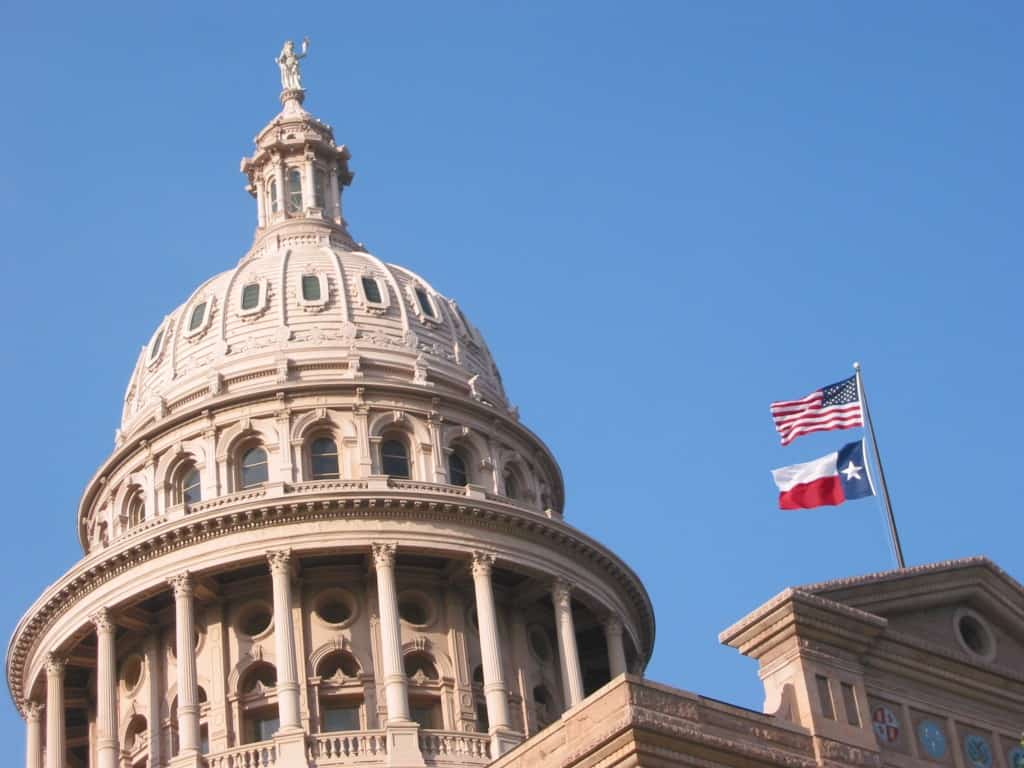
The Texas Capitol in Austin, about thirty minutes from the main campus. Texas voters wrote the ban on a personal income tax into the state constitution in 2019.
What the same money actually buys
Metro area
What $100 buys there
Austin – Round Rock – San Marcos (the main campus metro)
$102.44
Houston
$99.78
Dallas – Fort Worth
$96.81
New York City
$88.91
Los Angeles
$86.61
These are regional price parities from the US Bureau of Economic Analysis, 2023 data. Read it like this: $100 spent in the Austin metro — where the main campus sits — has the purchasing power of $102.44 measured against national prices, while in Los Angeles it drops to $86.61. That is a gap of roughly 18%, and most of it is rent. One caveat worth stating: this measures living costs and says nothing about tuition, which each university sets for itself.
Why Texas rather than California or New York
The real question is not whether Texas is good but what the same money buys you there. Three differences you can measure:
Living costs are materially lower
The table above shows where most of that gap sits: rent. San Marcos is a university town rather than a major city, so rents fall below even the wider Austin metro. On identical tuition, the four-year total diverges substantially.
The job market is pulling people in
Austin for technology, Houston for healthcare, Dallas for finance. With three years of post-study work for STEM graduates, studying where the jobs already are matters more than studying somewhere famous.
Admissions are more predictable
The large Texas public universities publish their academic and test thresholds. You can tell in advance whether you have a chance, rather than guessing at a holistic review.
Four big cities, and the work in them
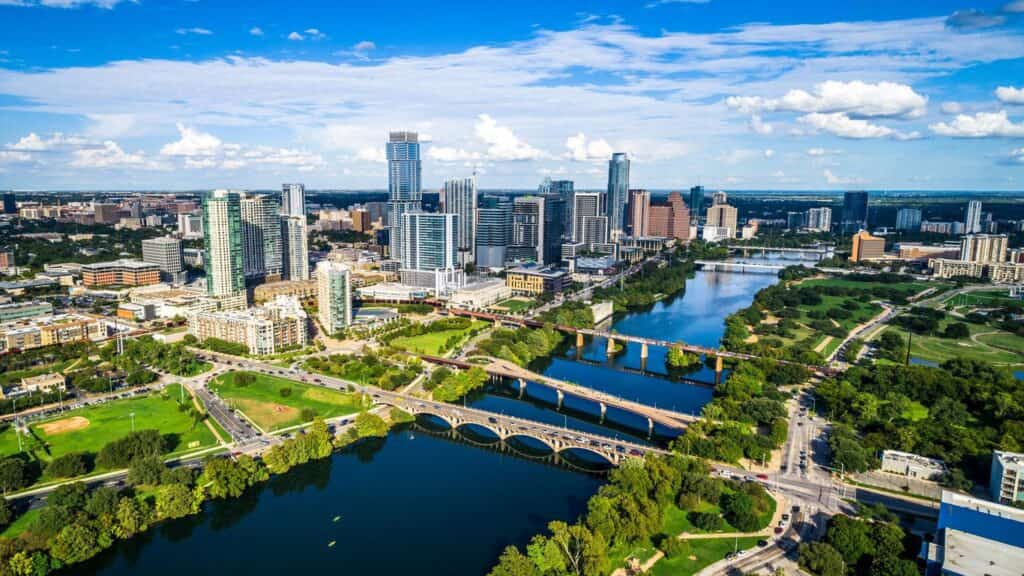
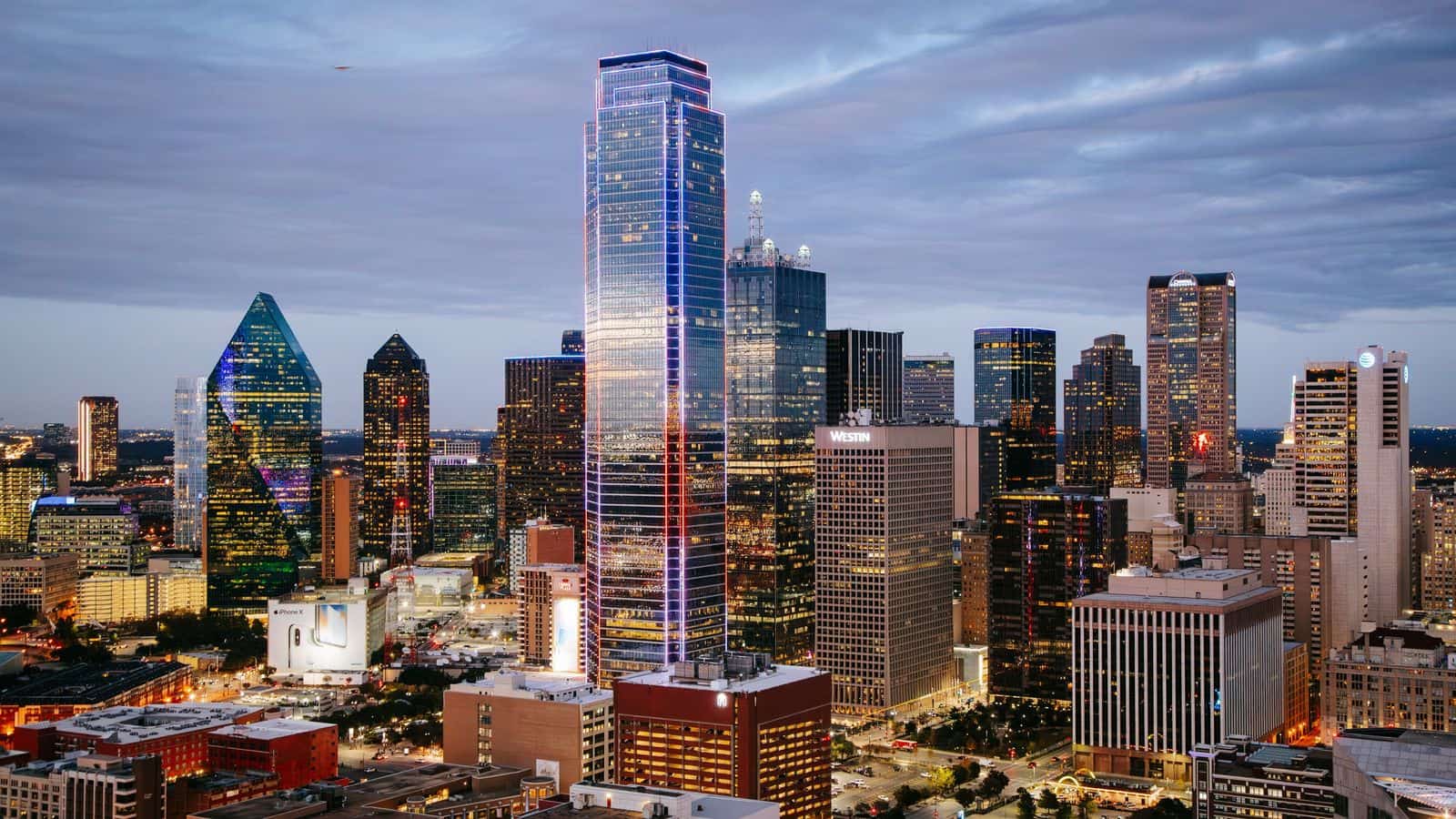
The main campus sits in San Marcos, between Austin and San Antonio. These are the four nearest employment centres, with real driving distances from the university.
Austin
50 km from campus · a 30-minute drive
The state’s technology centre. Dell is headquartered in Round Rock — where Texas State also runs its second campus — alongside Tesla, Apple and a semiconductor cluster expanding in Taylor. If you are studying computer science, engineering, data or information systems, this is the closest place to intern.
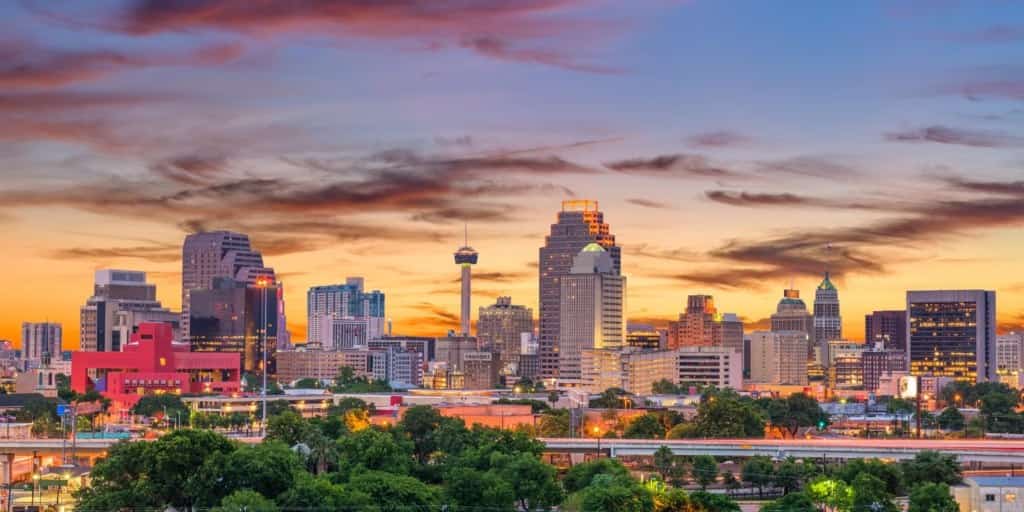
San Antonio
80 km from campus · a 45-minute drive
Healthcare, military medicine, cybersecurity and tourism. The state’s second-largest city, with a substantial Vietnamese community and plenty of Asian groceries — a small thing that turns out to matter in a first year away from home.
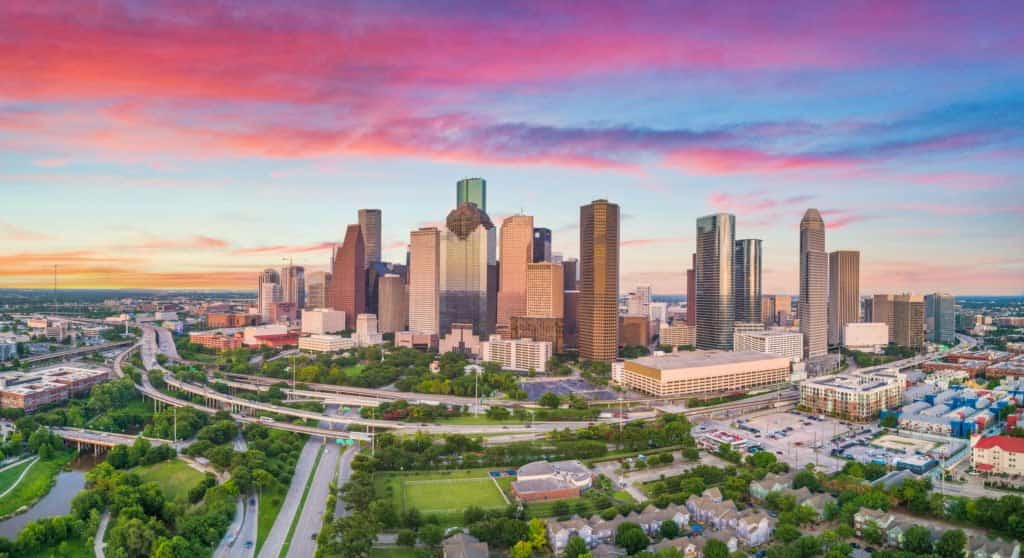
Houston
265 km from campus · about 2 hours 40 minutes
The Texas Medical Center here is the largest medical complex in the world: over 120,000 employees and roughly 10 million patient encounters a year. Add the energy industry and NASA’s Johnson Space Center. Greater Houston is also home to the third-largest Vietnamese community of any US metro.
Dallas – Fort Worth
364 km from campus · about 3 hours 25 minutes
Finance, telecommunications and aviation. NYSE Texas opened in Dallas in 2025. DFW is one of the busiest international gateways in the country — and a familiar connection on the way home to Vietnam.
The Vietnamese community in Texas
This is not a footnote. For most families the question "will my child be isolated" weighs more than any ranking table.
About 310,000 people of Vietnamese origin live in Texas — the second-largest population of any state, behind only California. Source: the American Community Survey, 2023.
Greater Houston alone accounts for roughly 140,000, making it the third-largest Vietnamese metro population in the country after Los Angeles and San Jose.
Closer to campus: Austin and San Antonio both have Vietnamese grocers, Asian supermarkets, temples and churches within a 30–45 minute drive, and Tết is celebrated publicly in the city rather than only inside a residence hall.
Flags of the countries represented among Texas State students.
The other side of it, stated plainly: a large community also means some students socialise only in Vietnamese, graduate with the English they arrived with, and leave with a visibly weaker job application. Nobody can force this either way — but knowing it in advance makes it a choice.
Who Texas does not suit
Anyone counting on US federal aid. Federal grants and loans are for citizens and permanent residents; international students access support through the university’s own scholarships, not the federal budget.
Anyone planning to fund study through work. An F-1 visa limits you to on-campus work, at most 20 hours a week in term. Do not build a budget on earnings.
Anyone who cannot take heat. Texas summers are long and days above 35°C are ordinary. It sounds trivial until you live through your first August.
Anyone taking a non-STEM degree who wants to stay long term. Non-STEM graduates get 12 months of OPT — one H-1B season instead of three.
San Marcos — where you will actually live
The state is vast, but your daily life happens in a small university town between two big cities, with a river running through the middle of campus.
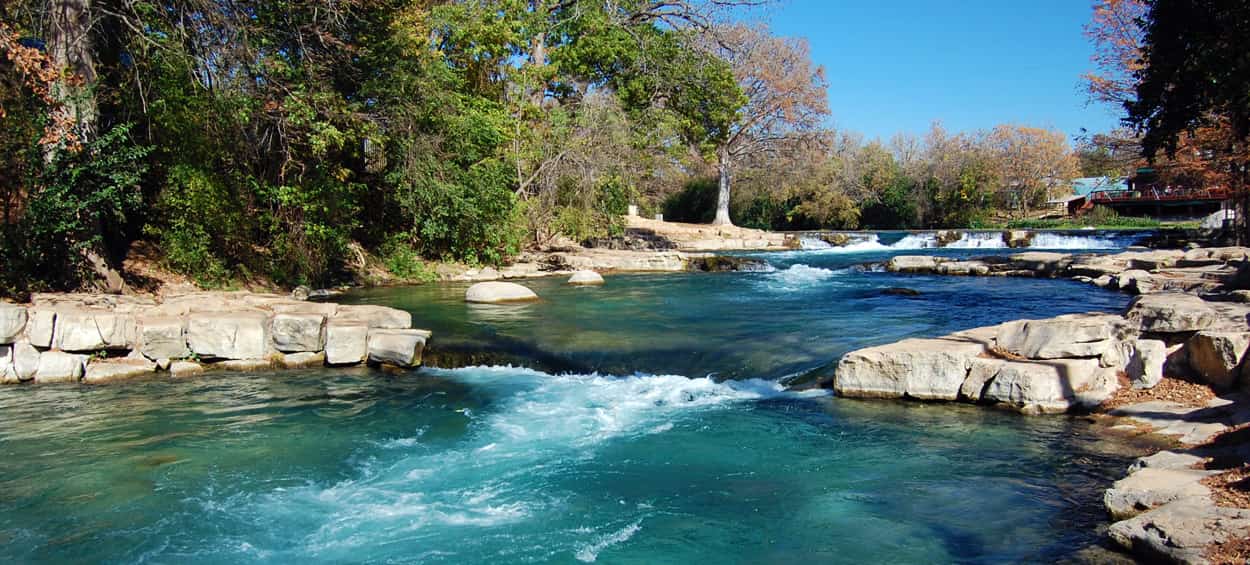
The San Marcos River holds about 22°C year-round. When a Texas summer passes 35°C, this is where the whole university goes.
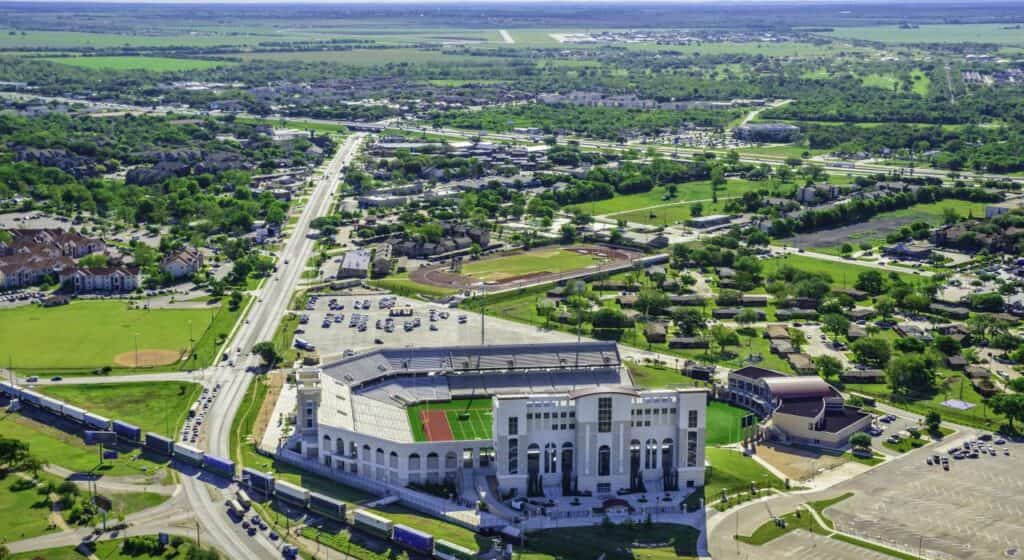
From above: campus, Bobcat Stadium and the town run into one another, and most of it is walkable.
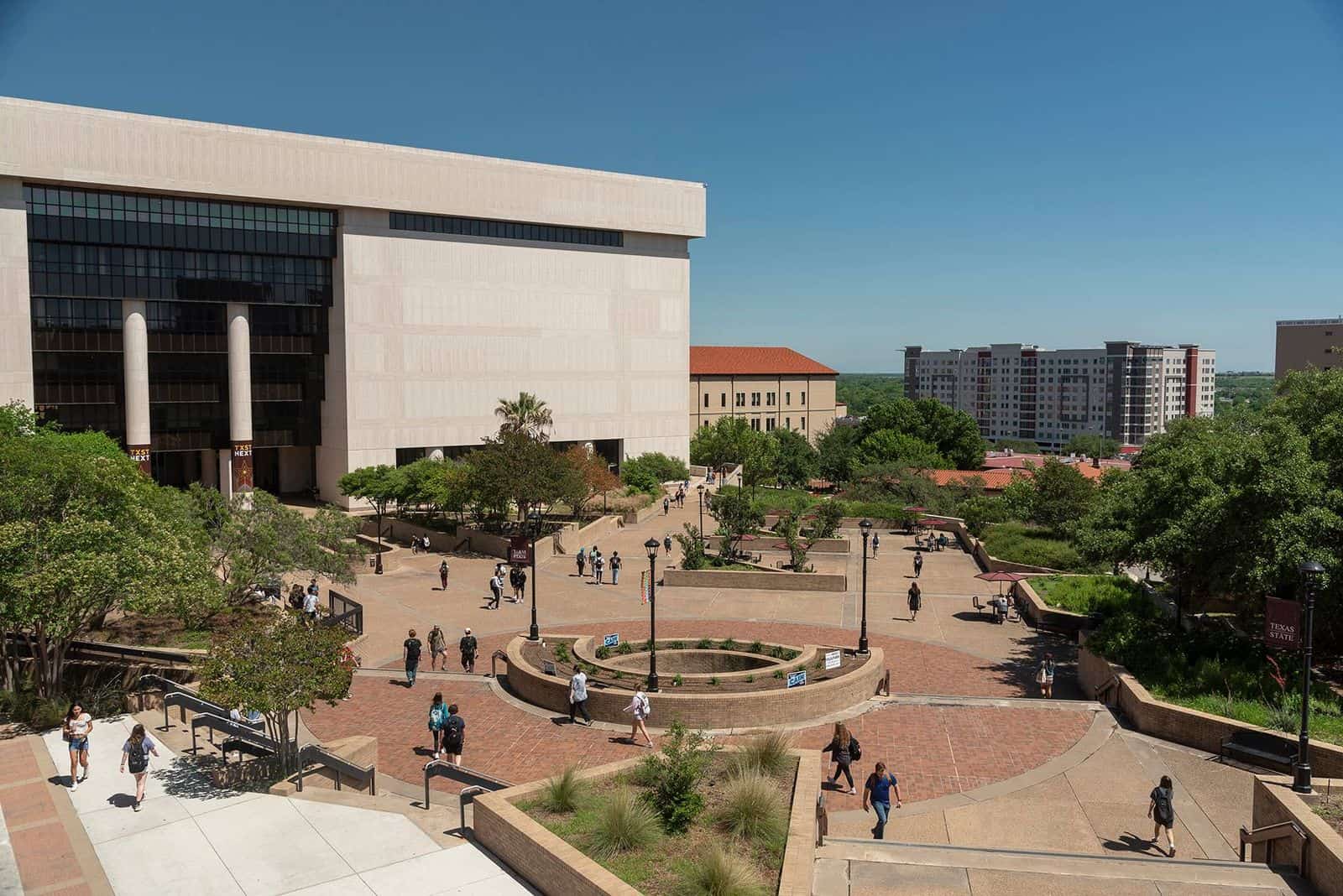
The heart of the San Marcos campus, where nearly every undergraduate program is taught.
The all-in figure covers tuition, fees, housing, food, books, personal costs and travel. Do not confuse it with the amount you must evidence to obtain an I-20: the university’s I-20 table is based on 12 credit hours and excludes books and travel, so it is lower — $40,600 for undergraduates and $32,000 for master’s students in 2026–27. A scholarship comes off the tuition portion.
The part most applicants miss: at Texas State, international students are considered for the same academic scholarships as domestic students, based on SAT/ACT and class rank, with no separate scholarship application. The admission file is the scholarship application.
Criteria
Value
SAT 1420+ or ACT 32+, top 25% of class
$48,000 over four years
SAT 1260–1410 or ACT 27–31, top 25% of class
$32,000 over four years
Top 6–15% of class, no test score needed
$28,000 over four years
Top 16–25% of class, no test score needed
$24,000 over four years
There is a second layer: earning $1,000 or more in competitive scholarships can unlock a waiver of the nonresident portion of tuition, worth roughly $12,840 a year. That one is not automatic — the awarding department processes it.
You do not have to wait a year. Texas State runs an intensive English program on campus (TSIE) and an online version you can start from home (OTSIE), both progressing directly into a degree.
This is what turns "not eligible this year" into "starting next intake". One caveat: studying TSIE in the United States still requires an I-20 and an F-1 visa, exactly as a degree student would.
There are no nonstop flights to Texas. Expect one connection through Tokyo, Seoul, Taipei, Hong Kong or San Francisco, and a total journey of roughly 20–24 hours.
Nearest airport
Austin–Bergstrom (AUS), about an hour from San Marcos by road. San Antonio (SAT) is a similar distance.
Getting around
Campus and downtown San Marcos are walkable and the university shuttle is free. Beyond the town you need a car or someone to share one with — a cost families routinely leave out of the budget.
Weather
Long summers with many days above 35°C; short, mild winters. Every building, bus and shop is air-conditioned.
Time zone
Texas runs 12 hours behind Vietnam in summer and 13 in winter. Calls home need planning, and this is what makes the first week harder than people expect.
Counted from today and refreshed daily. For an international application the priority date is the real one — after it come the I-20, the SEVIS fee and a visa appointment, three things outside your control.
Months 12–10 before departure: settle on a field, check entry requirements, sit an English test if you have no certificate.
Months 10–8: prepare certified translated transcripts and apply as early as you can — early applications affect both scholarships and housing.
Months 8–6: receive decisions, submit the housing contract with its $300 deposit.
Months 6–4: assemble financial evidence, receive the I-20, pay the SEVIS fee.
Months 4–2: book the F-1 visa interview. This is where timelines slip, because consular calendars are not yours to control.
Months 2–0: book flights, choose a move-in slot and a meal plan, attend online orientation.
How to verify the university before you send money
The study-abroad market contains institutions that do not exist. Do not take our word for it — look it up. Texas State University holds IPEDS ID 228459 in the US Department of Education database, is accredited by SACSCOC, and its official domain is txst.edu.
For 2026–27 the all-in figure is about $43,720 for an undergraduate and $35,360 for a graduate student, covering tuition, housing, food, books and personal costs. Scholarships come straight off that.
Can I get a scholarship without SAT scores?
Yes. Two tiers are awarded on class rank alone: the top 6–15% receive $28,000 and the top 16–25% receive $24,000 over four years. The highest tiers do require SAT or ACT.
Can I apply without IELTS?
Yes — you enter through the TSIE intensive English program on campus or OTSIE online, then progress straight into your degree rather than waiting a year.
Can I work in the US afterwards?
STEM-designated degrees carry up to 36 months of OPT, which means three H-1B lottery seasons. Non-STEM degrees carry 12 months. This is worth weighing when you choose a field.
Must first-year students live on campus?
Yes, for anyone who finished secondary school within twelve months of enrolling — the clock runs from leaving school, so it also catches transfer students. Graduate students are not covered.
Can international students take US government student loans?
No. Federal grants and loans are for US citizens and permanent residents. International students access support through the university’s own scholarships.
How long is the journey from Vietnam?
There are no nonstop flights. Expect one connection through Tokyo, Seoul, Taipei, Hong Kong or San Francisco and a total journey of roughly 20–24 hours. The nearest airport is Austin (AUS), about an hour from San Marcos.
Is there a Vietnamese community in Texas?
Yes. Around 310,000 people of Vietnamese origin live in Texas, the second-largest such population of any state after California, with roughly 140,000 in greater Houston alone. Closer to campus, Austin and San Antonio both have Vietnamese grocers, temples and churches within a 30–45 minute drive.
Do I need to buy a car?
Not for campus and downtown San Marcos — walking and the free university shuttle cover those. But large supermarkets, internships and weekend trips effectively require a car or someone to share one with. It is the cost families most often leave out of the budget.
Why Texas rather than California?
Mostly living costs and tax. On the US Bureau of Economic Analysis regional price parities for 2023, $100 in the Austin metro has the purchasing power of $102.44 against national prices, against $86.61 in Los Angeles — a gap of roughly 18%, most of it rent. Texas also levies no state income tax, which matters once you are working on OPT.
Want to know where your application stands?
The Vietnam office checks your transcripts and English score against each program’s real requirements and replies within 1–2 business days. Free of charge.