
FOR INSTITUTIONS
2+2 and 3+1 pathways into Texas State University
For colleges and universities building a transfer route to the United States for their own students. This page states plainly which models work, which do not, and the three numbers that decide it.
72 hours
maximum credit accepted from a two-year college
25%
of the degree must be coursework taught by Texas State
2.25
minimum GPA once a student holds 30+ transferable hours
No fee
for credential evaluation — TXST evaluates in house, not via WES
Three numbers decide every model
Before discussing models, read the graduation rules in the Texas State undergraduate catalog. These three constraints are not negotiable, and between them they rule out several models that are still advertised elsewhere.
A 72-hour ceiling from two-year colleges
Texas State applies at most 72 semester credit hours from an accredited junior or community college toward a degree. Anything beyond that is not lost at your institution, but it does not count toward the TXST degree.
25% must be Texas State coursework
At least a quarter of the minimum hours required for the degree must be completed through Texas State coursework. On a 120-hour degree that is 30 hours. This is why any model with no TXST-taught component cannot graduate a student.
24 advanced hours, 12 in the major
Within that residency portion, at least 24 hours must be advanced and at least 12 of those must be advanced hours in the major at Texas State. On top of that, 24 of the final 30 hours of the degree must be taken at Texas State.
What works, and what does not
| Model | Viable? | The binding constraint |
|---|---|---|
| 2+2 from a college or university | Yes | Sixty hours at your institution sits under the 72-hour ceiling, and sixty hours at TXST is well past the 25% minimum. This is the easiest model to build and the sensible place to start. |
| 3+1 from a four-year university | Yes, but tight | The 72-hour ceiling applies only to two-year colleges, so a university is not caught by it. But 30 hours at TXST is exactly 25% of a 120-hour degree, and those 30 must include 24 advanced hours and 12 advanced hours in the major. The curriculum has to be designed for this from the outset; it cannot be retrofitted. |
| 3+1 from a two-year college | No | Three years at a two-year college is roughly 90 hours, above the 72-hour ceiling. The excess does not count, so the student makes up coursework and the “+1” becomes closer to +1.5. |
| 4+0 taught by your institution | No | The 25% residency portion must be Texas State coursework. A partner can teach everything else, but cannot substitute its own teaching for that portion — however closely the content matches. |
| 4+0 hosted on your campus with TXST teaching the upper division | Possible in principle | This is precisely the model Texas State runs domestically with Collin College. But opening a new instructional site is a substantive change for accreditation purposes: it must be reported to SACSCOC and in many cases approved before it starts. An agreement between two institutions is not sufficient on its own. |
| 1+1 or 3+1+1 into a master’s | Texas State states an interest | These appear on the university’s published list of models it wants to explore, alongside 2+2 and 3+1. There is no ready-made framework yet; it has to be worked out discipline by discipline. |
This table is built from the graduation policy in the Texas State undergraduate catalog and the university’s own International Partnerships page, not from inference. Sources are listed at the foot of this page.
What a real 4+0 looks like
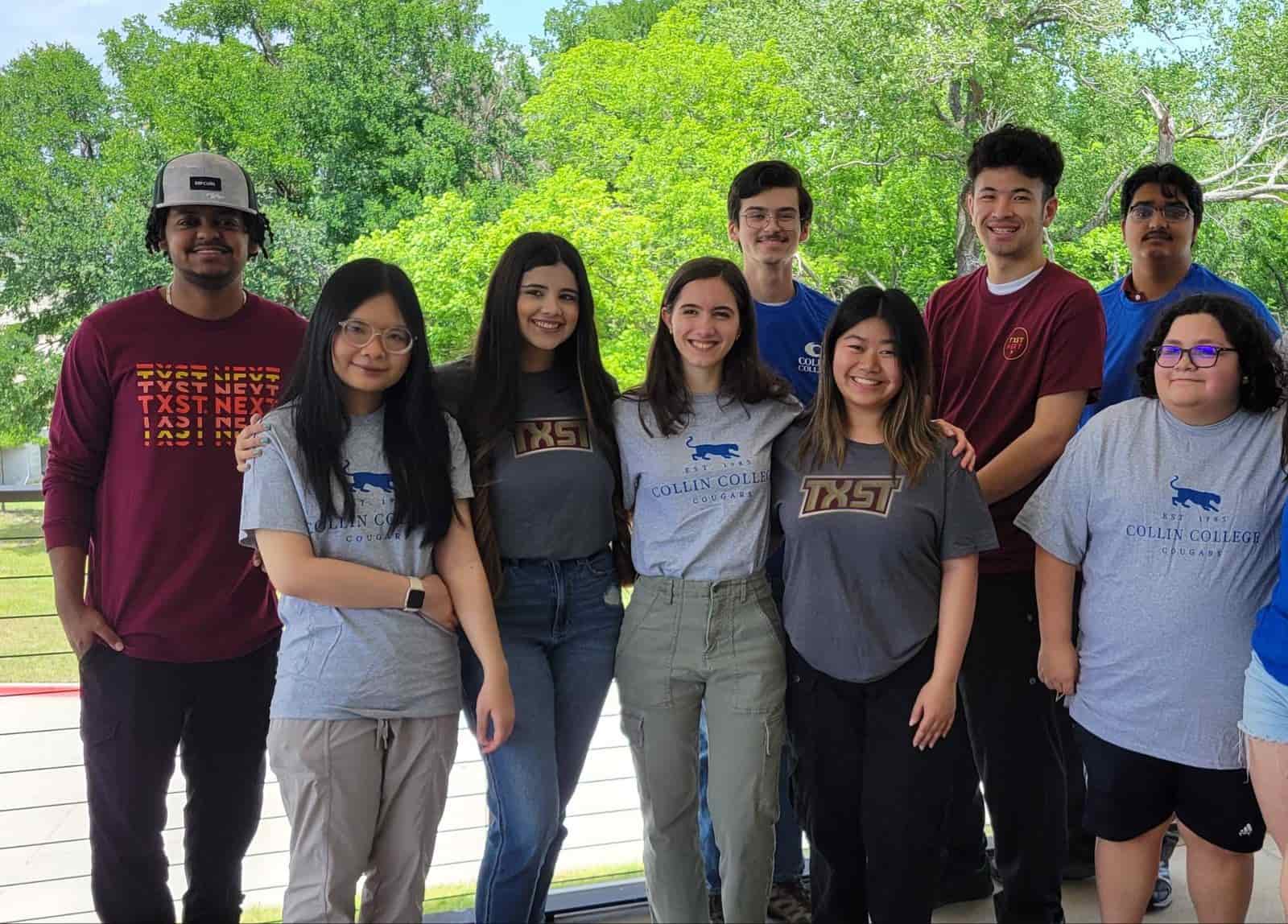
Texas State runs an academic alliance with Collin College and the University of Texas at Dallas under which students complete an entire four-year Texas State bachelor’s degree on the Collin College campus. How it works shows exactly where the limits of a 4+0 sit.
- Students take more than 50% of their coursework taught by Collin College itself — that is the partner’s share.
- Upper-division courses are taught by Texas State faculty in a mixed modality. This is the part that cannot be delegated.
- Students are admitted to Texas State automatically for the semester on their declaration form, and use the libraries, advising and student organisations of both institutions.
- Four degrees run under the model: Electrical Engineering with a computer engineering concentration, Engineering Technology, Computer Science, and Exercise and Sports Science.
- The universities state savings of up to $19,000 in tuition and fees, plus a $2,000 annual scholarship renewable for a second year.
Three documents, and the one you actually need
| Document | Scope | Who approves and signs |
|---|---|---|
| Memorandum of Understanding | Institutional. A general framework; commits no specific course. | Reviewed by the Associate Vice President for Enrollment Management, with the President consulted; signed by the Provost. |
| Articulation agreement | Departmental. Names each course accepted toward a specific degree programme. | Initiated by the department, approved by the Dean, with the Provost and Admissions notified. |
| Transfer planning guide | Programme level. The course-by-course map, requirements and deadlines that students and advisers actually use. | Drafted by Curriculum Services, reviewed by the Transfer Center, approved by advising directors and posted by 1 August each year. |
What Texas State is looking for, and what it says it is not
We leave both of those in rather than omitting them, because knowing now saves your institution months of preparing in the wrong direction.
What transferring students must meet
| Transferable hours held | Minimum GPA |
|---|---|
| 14 hours or fewer | 2.0 — and the applicant must also meet freshman admission standards |
| 15 – 29 hours | 2.5 |
| 30 hours or more | 2.25 |
English: TOEFL iBT 78 overall with 19 in each section; or IELTS 6.5 overall with 6.0 in each section; or Duolingo 105. Students below those thresholds can still enter through the university’s intensive English programme and progress directly into the degree, so this is not a closed door.
Two technical points few people tell you
Texas State evaluates foreign transcripts itself
The Office of Admissions evaluates in house following AACRAO guidance and does not rely on third-party evaluators such as WES. For each applicant that removes a fee and several weeks of waiting.
Credit does not convert one for one
Texas State maintains its own conversion rates by country, targeting roughly 15 credit hours per semester. The university’s own example: 6 ECTS in Europe transfers as 3 US credit hours. So 90 credits as your institution counts them may not become 90 hours at TXST. Map this before promising anything to students or families.
The process, and which step takes the time
Five steps from first contact to agreement
- Send an institutional profile through the Vietnam office: size, the programmes you teach, and the curriculum for the programme you want to link, in English.
- The office passes it to Texas State International Affairs and to the relevant academic department.
- The department maps course by course: title, credit hours, contact hours and syllabus content. This is the longest step and there is no shortcut — fuller syllabi move faster.
- If the curricula align, the two sides draft an articulation agreement for each specific programme.
- Texas State produces a transfer planning guide for students and advisers at both institutions to work from.
Send a partnership proposal
Tell us about your institution. Attaching the English-language curriculum for the programme you want to link lets us pass it straight to the academic department and saves a round of correspondence.
Frequently asked questions
We are a two-year college. Can we do 2+2?
Yes, and it is the model that suits a two-year college best. Two years with you is roughly 60 credit hours, comfortably under the 72-hour ceiling Texas State applies to two-year institutions. The work is in mapping the courses, not in signing a memorandum.
Why does 4+0 not work?
Because the graduation rules require at least 25% of the degree to be coursework taught by Texas State itself. If a partner teaches that portion, the student cannot qualify for the degree. Models where all four years are spent on a partner campus do exist — the Collin College alliance is one — but the upper-division teaching there is still done by Texas State faculty, and opening such a site requires accreditor approval.
Does Texas State already have agreements with institutions in Vietnam?
Not at present. The Vietnam office is an authorised recruitment representative and acts as the channel for proposals to the university’s International Affairs office. We do not sign on the university’s behalf, and we do not claim agreements that do not exist.
How long does an articulation agreement take?
Almost entirely down to the curriculum mapping. The academic department examines each course: credit hours, contact hours and syllabus content. An institution that supplies detailed English-language syllabi from the start moves markedly faster than one sending only course titles.
Do students need a WES evaluation?
No. The Texas State Office of Admissions evaluates foreign transcripts itself, following AACRAO guidance, and does not use third-party evaluators. Transcripts not in English need a certified translation alongside the original.
Does the pathway still work for students without IELTS?
Yes. They enter through the university’s intensive English programme and progress directly into the degree. Build this into the pathway from the start, because it affects both the duration and the cost of the whole programme.
Sources
- Undergraduate degree and graduation policies — the 72-hour cap, the 25% rule, advanced hoursmycatalog.txstate.edu
- International partnerships — the models the university is and is not seekingwww.txst.edu
- Transfer partnership policy, three document types (G/PPS 02.07)policies.txst.edu
- International admission requirements and transcript evaluationwww.admissions.txst.edu
- The academic alliance with Collin Collegenews.txst.edu
Not sure which model fits your institution?
Send the curriculum for one programme and we will map it against Texas State’s actual requirements, then tell you which model is feasible and where it snags. No charge.