
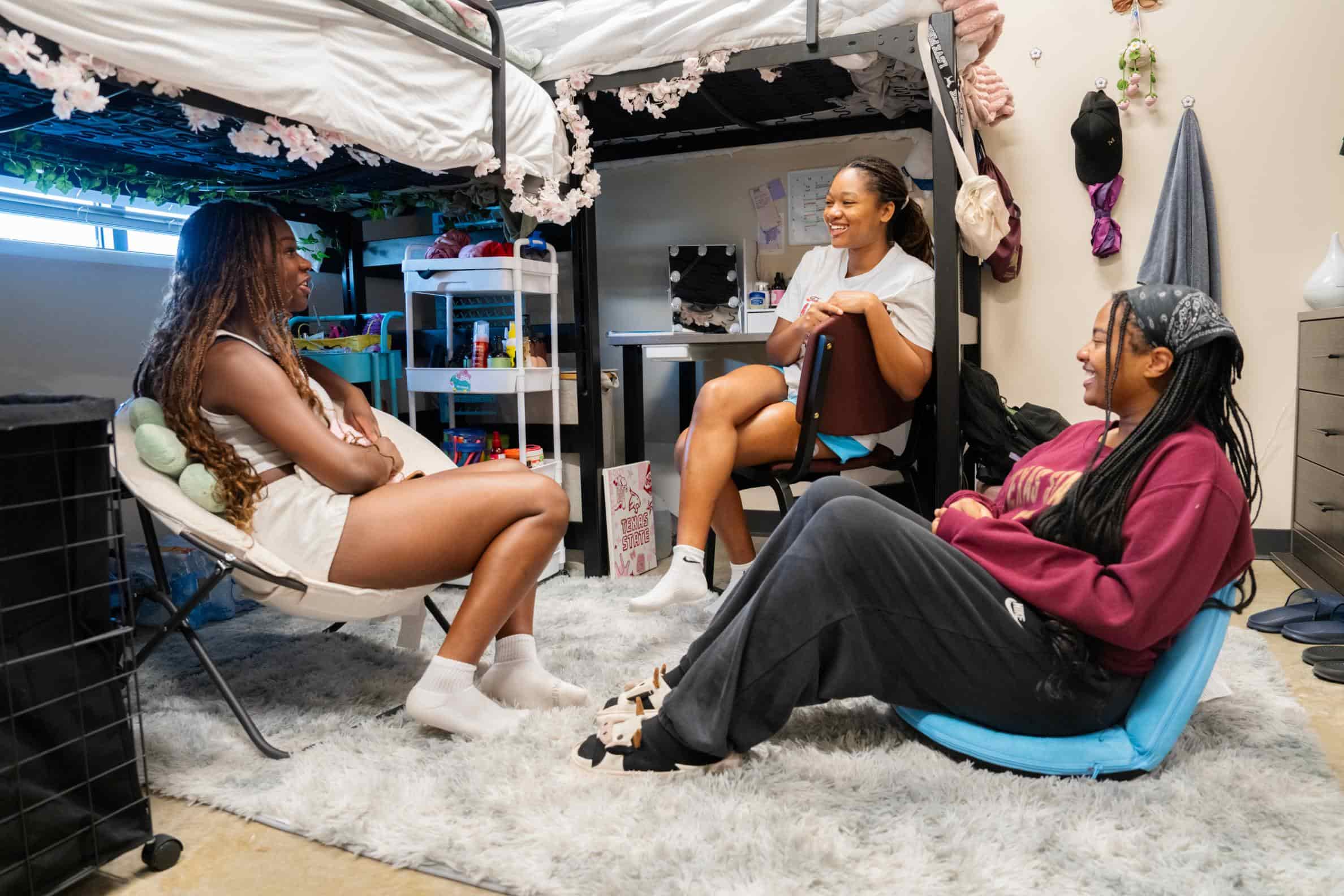
HOUSING AT TXST
Where you will live in year one — and what it costs
Twenty-four halls are open to first-year students at Texas State, and the cheapest is barely half the price of the dearest. Here are the real rates by room type, the application calendar, and the charges the official cost sheet leaves out.
24
halls open to first-year students
$3,660
lowest rate — shared room, per semester
$300
deposit due with your housing contract
15
living-learning communities
Read this first: your first year is spent on campus
Anyone who finished secondary school within the twelve months before the semester they enrol must live on campus. The clock runs from when you left school — not from how many credits you hold — so it reaches transfer students who started university less than a year ago.
What each room type actually costs, 2026–27
These are room charges per semester. A meal plan is separate and compulsory if you live on campus. Contracts run for the academic year — autumn and spring together.
| Room type | Example halls | Per semester | Academic year |
|---|---|---|---|
| Double room, community bathroom | Jackson · Lantana · Butler · Sterry | $3,660 | $7,320 |
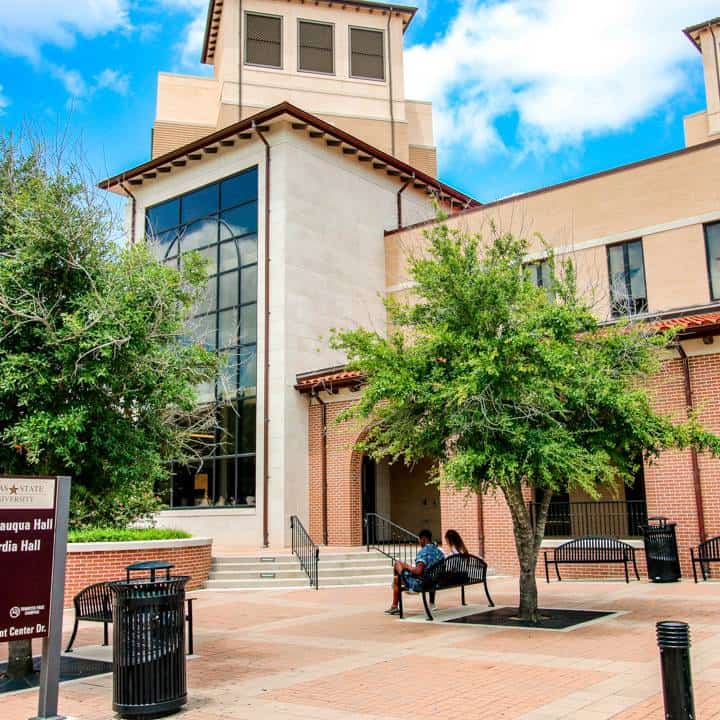
| Double room, semi-private bathroom | Gaillardia · Chautauqua · First Five Freedom | $3,975 | $7,950 |
| Double room, in-suite bathroom | Bexar · Falls · Sayers · Tower | $4,480 | $8,960 |
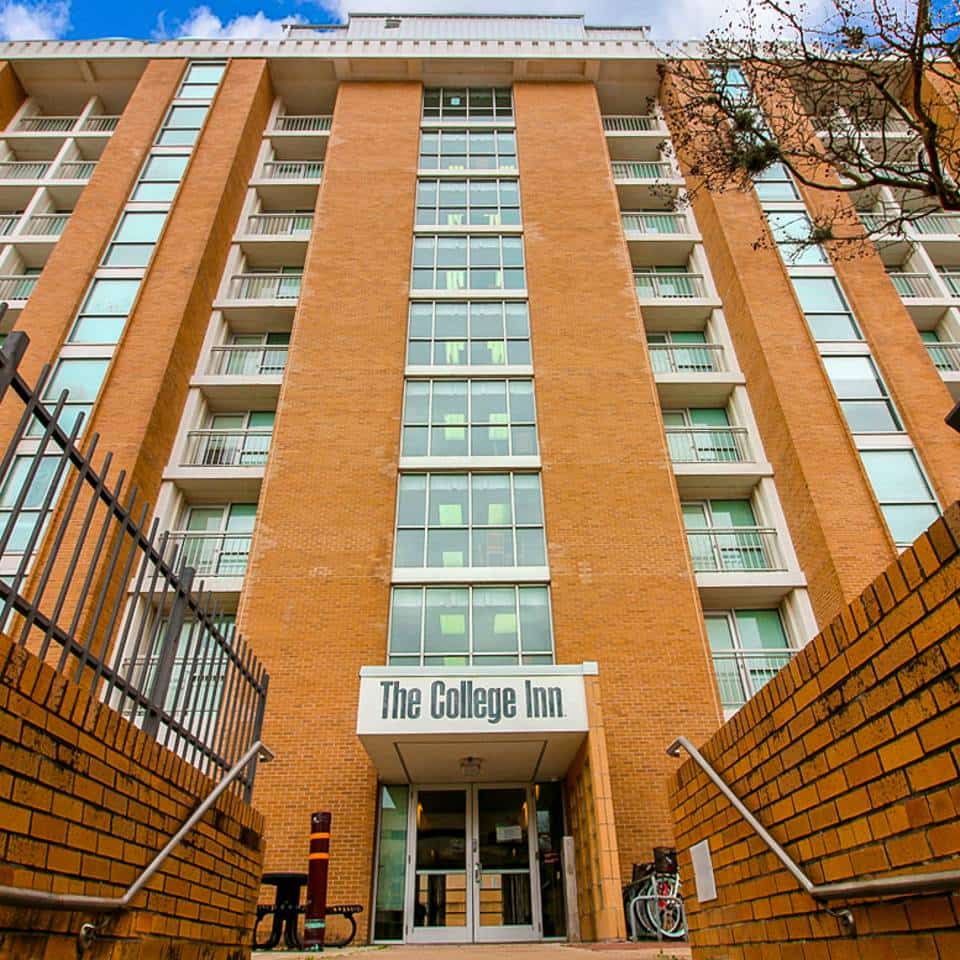
| Double room, suite with living area | College Inn · San Marcos | $5,000 | $10,000 |
| Single room, community bathroom | Brogdon · Mesquite · Cibolo | $5,325 | $10,650 |
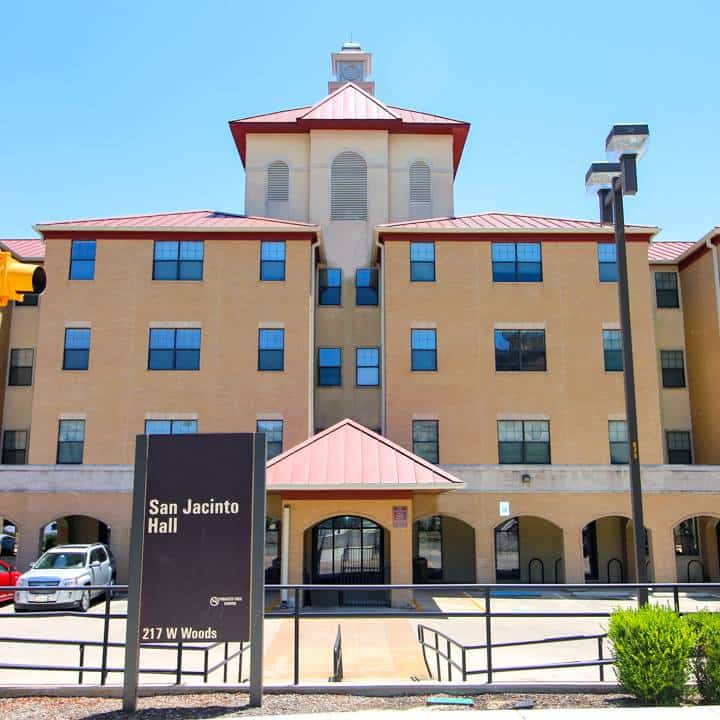
| Single room, in-suite bathroom | San Jacinto · Falls · Sayers | $5,920 | $11,840 |
The academic-year column is simply the semester figure doubled, for quick comparison; it is not a number the university publishes. The gap between the cheapest and the dearest room is roughly $4,500 a year — about one semester of tuition.
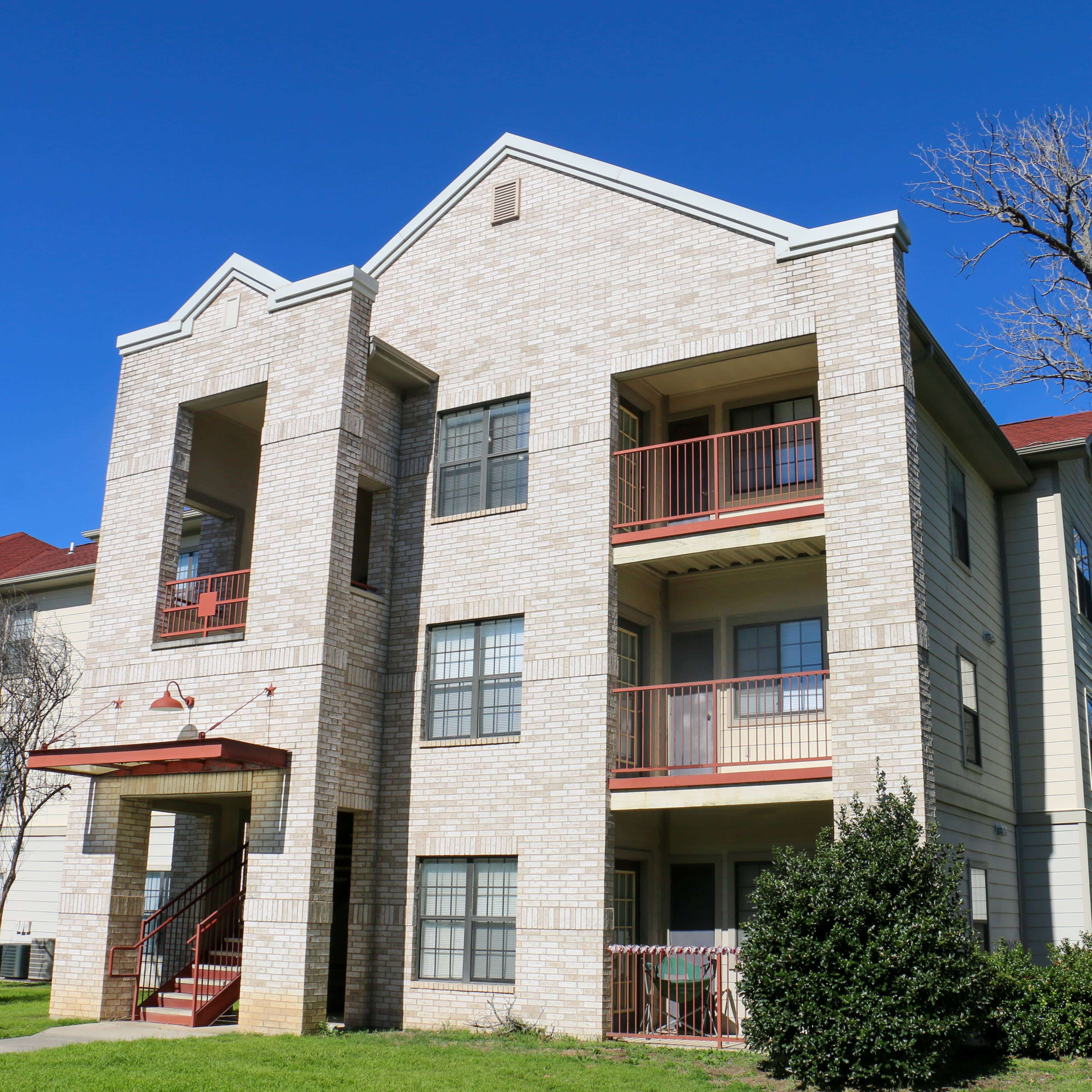
On-campus apartments — upper-division only
Balcones and Cypress are reserved for students who have served their first-year requirement. The more bedrooms in the unit, the less each person pays, which makes these the affordable way to stay on campus.
| Apartment type | Per semester | Academic year |
|---|---|---|
| Studio | $5,920 | $11,840 |
| One bedroom | $6,190 | $12,380 |
| Two bedroom | $5,380 | $10,760 |
| Three bedroom | $4,845 | $9,690 |
| Four bedroom | $4,570 | $9,140 |
| Five bedroom | $4,305 | $8,610 |
Living-learning communities
Fifteen communities put students from the same field in the same building and into some of the same first-year classes. The Engineering community lives in Richard A. Castro Hall and shares Calculus I and Engineering Chemistry; the Business community lives in College Inn and shares Introduction to Business and Mathematics for Business.
Living-learning communities
- Engineering · Science & Technology · Pre-Medical and Pre-Dental
- Business · Psychology · Pre-Nursing
- Art & Design · Performing Arts · Journalism & Mass Communication
- Future Teachers · Health & Human Performance · Honors
- Major and Career Exploration, for students who have not chosen yet
The autumn intake calendar
In this order
- Offer letter in hand — submit the housing contract on the Housing Portal. Early submission improves your odds of a first-choice hall.
- Pay the $300 deposit. Until it clears, the contract does not count as submitted.
- Name your top three living-learning communities inside the contract, if you want one.
- Choose a roommate — the window runs from late January to mid-May.
- Submit room preferences from late March to mid-May. Skip this and you will not be assigned a space at all.
- Assignments go out from late May; then book a move-in slot.
- Pick a meal plan over the summer — compulsory for on-campus residents.
Charges the cost sheet does not show
- Winter break is billed separately at $140 a week, $500 for all five. Autumn and spring breaks are free and need no sign-up.
- Getting locked out costs $25 a time, billed to your student account.
- Mini-fridges: one 2.5 cu. ft. per resident, or one 4.6 cu. ft. shared between two. A surge-protected power strip is required.
- The meal plan is a separate compulsory charge and is not included in the room rates above.
Post and parcels
Mail reaches each hall Monday to Saturday. UPS and FedEx parcels are held at the front desk of your building — check its collection hours. Address everything as: your full legal name, the hall street address with room number, San Marcos, TX 78666.
Living off campus
When you may
After your first year, or if you left secondary school more than twelve months before enrolling, or as a graduate student.
What it costs
San Marcos is a college town, so rents sit well below Austin’s. Sharing with three or four people is the usual way to bring the number down.
Do not sign from abroad
Never sign a lease before you have seen the place and know which Bobcat Shuttle route serves it.
Before you sign a lease
Frequently asked questions
Can I pick my hall?
You rank preferences rather than choose outright. The earlier your contract arrives, the better your chance of a top choice. Submit no preferences and you will not be assigned a room.
Can I pick my roommate?
Yes — roommate selection runs from late January to mid-May on the Housing Portal. Without a choice, the university matches you.
Where do graduate students live?
They are not covered by the live-on requirement. Most rent off campus, or take an on-campus apartment if space allows.
Do I have to move out over winter break?
No, but you must register to stay and pay $140 a week. Autumn and spring breaks are free and need no sign-up.
Do the rates include food?
No. The meal plan is separate and compulsory for on-campus residents. See the dining page for the options.
Is on-campus cheaper than renting?
In year one the question is moot — you have no choice. From year two, sharing off campus is usually cheaper once you accept utilities, internet, travel and a twelve-month lease.
Read next
Dining & meal plans
The compulsory companion to living on campus.
Getting around & the Bobcat Shuttle
What decides where renting off campus makes sense.
Costs & scholarships
Where housing sits in the full year’s cost.
Source: Texas State University Housing & Residential Life — 2026–27 rate tables, contract milestones, the live-on requirement, break housing charges and mail guidance. Photographs courtesy of Texas State University. The academic-year column and the notes for international students are the International Office’s own. reslife.txst.edu
Want help choosing?
The International Office walks you through the housing application, explains the contract, and can put you in touch with students currently living in the halls.