Student Experience
A Texas State senior leads a study: does a resident dog help women in recovery feel more connected?
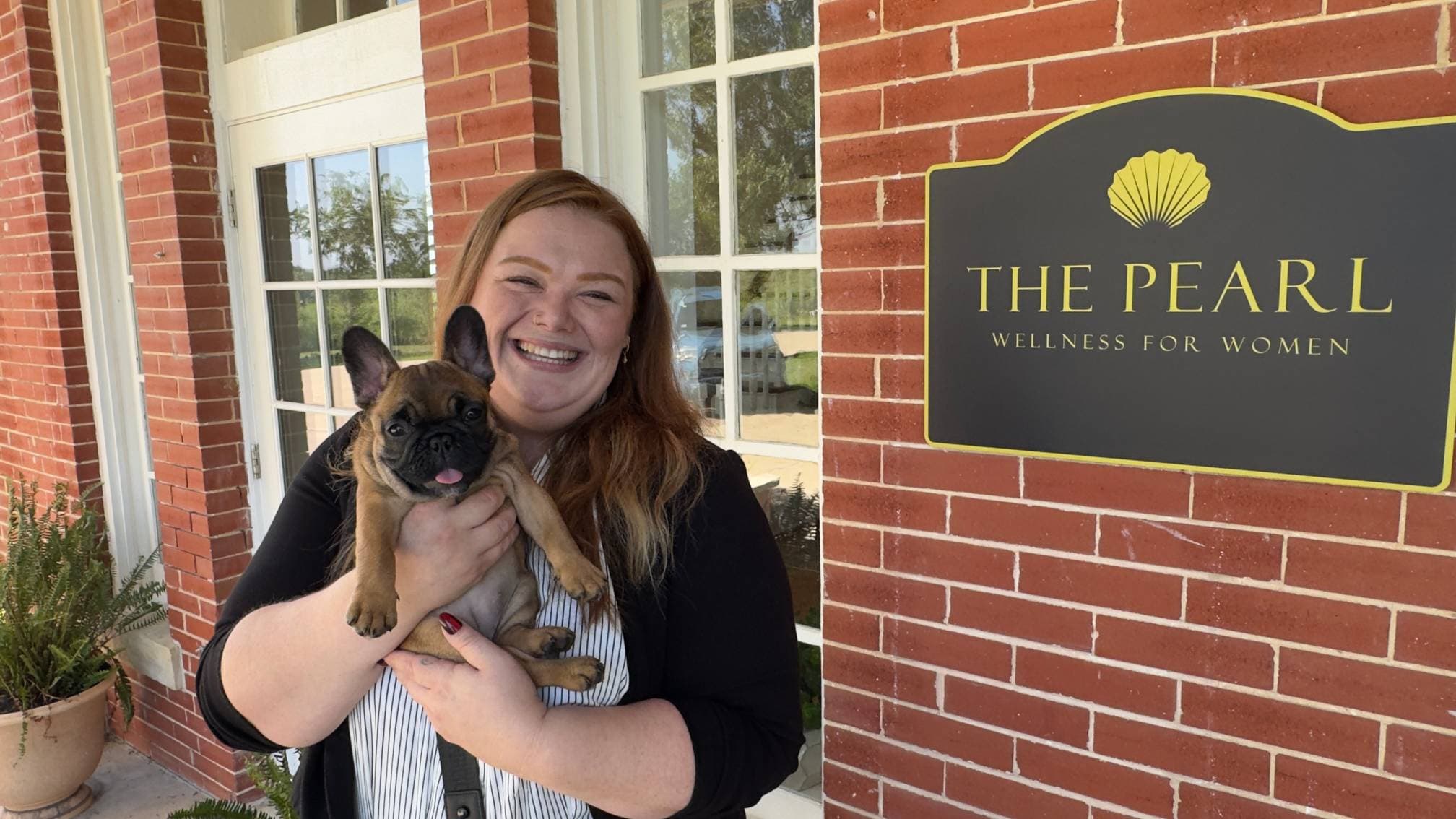
At The Pearl Wellness for Women in Elgin, Texas, a French bulldog named Bougie lives alongside women receiving treatment for substance use. Morgan Gaither, a Texas State senior, is studying whether a bond with a resident dog like him helps women feel more connected in early recovery.

An undergraduate as principal investigator
This is the detail that made us run the story: Gaither is the study’s principal investigator — while still an undergraduate, reading for a BS in psychology with minors in data analytics and criminal justice.
The study examines whether a strong bond with the resident dog is associated with stronger interpersonal connection and spiritual well-being among women in treatment. Data collection began on 5 August and is expected to run until mid-February: women in care may complete surveys at the start and end of their stay.
“Some individuals may find it easier to build a connection with an animal who loves unconditionally, especially in those crucial days in early recovery before they feel able to trust humans again.”
MORGAN GAITHERGaither has chosen to speak openly about her own recovery. During her treatment she found comfort in a dog named Buddha, and according to the university that experience led her to this research question.
“I just want to help people. If sharing my story helps even just one other person, it’s worth it.”
MORGAN GAITHERThere are no results yet
She works under Dr. Priscilla Goble, associate professor in the School of Family and Consumer Sciences, and was chosen from a competitive pool to join Goble’s lab through the OUR HDFS fellowship.
What the announcement does not tell international students
The announcement describes OUR HDFS as an NSF-funded programme giving undergraduates hands-on research experience and preparation for graduate school. We checked: it is an NSF REU Site (Research Experiences for Undergraduates), award 2348695, $439,005, September 2024 to August 2027.
We say this not to discourage you but so you do not spend effort applying to a door that is already closed. International students still have routes into undergraduate research — assistant posts in a faculty member’s lab, honours thesis projects, or university programmes not funded through REU. The right question is: “where does this position’s funding come from, and does it accept international students?”
See also: undergraduate admissions · the programme list.
Sources: TXST student leads study on how a resident dog may help women in recovery, news.txst.edu, 28 September 2026 (all study details, quotations, photographs) · NSF Award 2348695 (OUR HDFS as REU Site, amount, period) · NSF 23-601, Research Experiences for Undergraduates (citizenship requirement for participants).
Want to know whether your field offers undergraduate research?
See bachelor’s entry requirements and Texas State’s programme list.
Undergraduate admissions