Texas & San Marcos
The 1965 Higher Education Act was signed on the Texas State campus
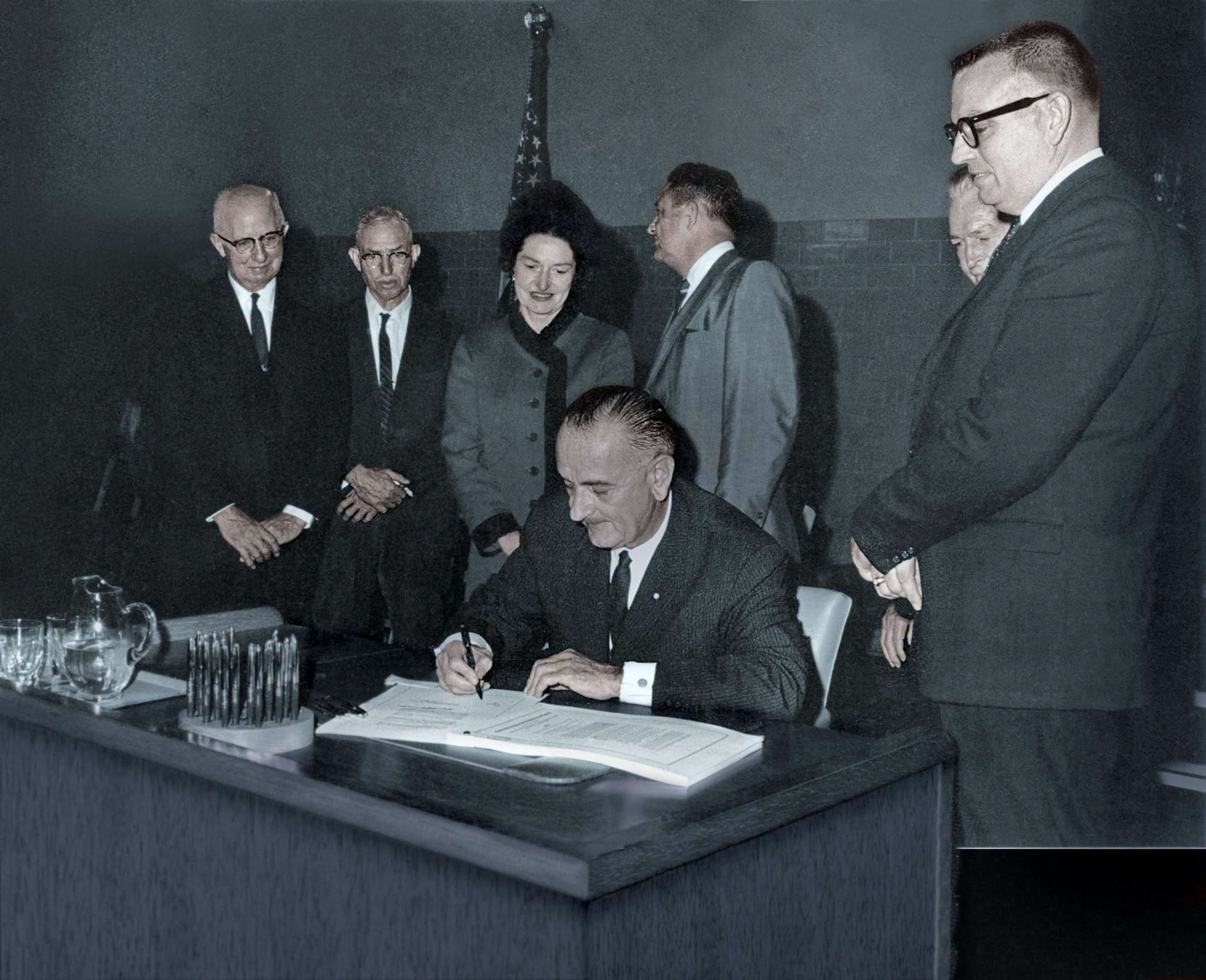
On 8 November 1965, President Lyndon B. Johnson came to San Marcos to sign a law that opened university to millions of Americans. He signed it on the campus where, thirty-five years earlier, he had taken his own bachelor's degree — today the campus of Texas State University.
One law, and why it was signed here
The Higher Education Act of 1965 created the system of federal grants and loans for American students. Before it, going to university depended largely on what a family could afford. After it, millions of young Americans had another route.
Johnson could have signed the act anywhere. He chose San Marcos. According to the plaque placed at the site, he signed it in Strahan Gymnasium, on the campus where he had earned his bachelor's degree in 1930. Nearly twenty years after the ceremony, that gymnasium was converted into the Music Building, which still stands there today. Texas State notes that this was the second piece of education legislation Johnson brought to Texas to sign.
Here the seeds were planted from which grew my firm conviction that for the individual, education is the path to achievement and fulfillment; and for the nation, it is the path to a society that is not only free but civilized; and for the world, it is the path to peace — for it is education that places reason over force.
LYNDON B. JOHNSONThe plaque, and what is written on it
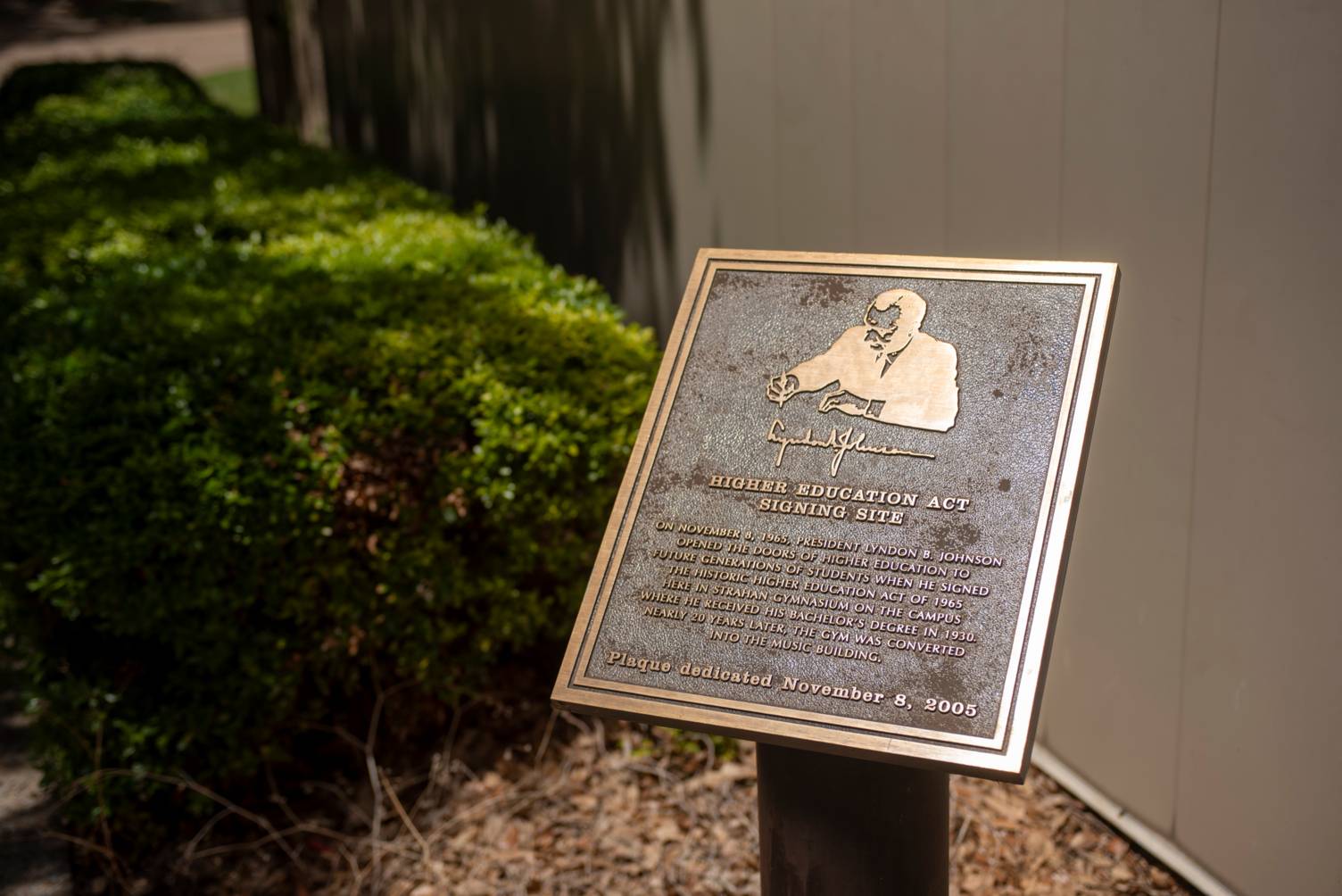
In 2005, on the fortieth anniversary of the signing, the university placed a bronze plaque marking the exact spot where the ceremony took place. It was dedicated on 8 November 2005 — forty years to the day.
Why this detail is worth remembering when you choose a university
Most of what you read when choosing a university is comparable numbers: tuition, rankings, acceptance rates. They matter, but they cannot tell you where an institution has stood in the story of a country.
Texas State is where a poor student from the Hill Country finished his degree in 1930, and where thirty-five years later he returned as President to sign the law that opened university to millions of others. If you visit San Marcos, the plaque sits beside the Music Building, a few minutes' walk from the centre of campus.
History & traditions
The full timeline, the seven names and the student traditions on the history page.
Rankings & accolades
Every ranking with the body that published it, on the rankings page.
Life in San Marcos
What the town around the campus is like — see student life.
Source: Higher Education Act Plaque, on the History & Traditions pages of Texas State University; the quotation is reproduced verbatim from that page. The details about Strahan Gymnasium, the year 1930 and the gymnasium's conversion into the Music Building are read from the text engraved on the plaque itself in the photograph. Photographs courtesy of Texas State University. No figures have been added beyond those two sources.
Want to study somewhere with that history?
The International Office advises on programs, entry requirements, costs and your application timeline — free of charge.
Talk to an adviser